
9 Ways to Cut Your Home Cooling Costs This Summer
Last Updated: November 7, 2026
Quick Summary
The most effective ways to lower home cooling costs are to set the thermostat smartly, use ceiling fans to feel cooler at higher settings, block sun through windows, seal duct and attic leaks, and keep the air filter and condenser clean. Start by walking the house to find where heat enters, then tackle the largest leaks first.
- Each degree above 72°F generally reduces cooling demand, so raising the setpoint saves energy.
- Set the thermostat around 78°F while home and raise it several degrees while away.
- Ceiling fans use only a small fraction of the power an air conditioner draws.
- Seal attic and duct leaks first, since they often deliver the largest comfort gain per dollar.
- Replace or clean the air filter every one to three months to keep airflow strong.
Table of Contents
- Set Your Thermostat Smartly: The Best AC Temperature for Summer to Save Money
- Use Ceiling and Circulating Fans to Feel Cooler at Higher Settings
- Block Heat Before It Enters: Window Coverings, Solar Gain, and Attic Ventilation
- Seal Leaks and Maintain Your System: The Most Efficient Way to Use AC
- Cutting Cooling Bills in an Apartment or Smaller Space
- Cooling-System Sizing, Replacement, and the Least Expensive Way to Cool a House
- Book Your Free Consultation to Find Your Biggest Savings
- Frequently Asked Questions
Most homeowners in Southwest Florida open their bill in July and wince, but few know which part of the house is driving the home cooling costs. Heat commonly gets into Florida homes through the roof, the windows, and the ductwork, and the air conditioner works overtime to fight it. The good news is that you do not need a costly audit to start saving.
Before you change a single setting, spend one afternoon walking the house. Note which rooms feel hottest, which rooms never seem to cool down, and whether your attic or garage radiates heat into the rest of the home. Those clues tell you where to focus.
Here is a simple diagnostic routine we recommend:
- Check the thermostat log. Note how many hours the system runs on a hot day.
- Feel the supply vents. Weak airflow often points to duct leaks or a dirty filter.
- Check the attic. A stuffy attic can push temperatures well above the living space.
- Look at the windows. Sun-facing glass that feels hot to the touch is adding heat all day.
- Compare your bills. Look at last summer’s bills for a baseline.
A common mistake is buying equipment before knowing where the heat comes from. Once you know the weak spots, the steps below become much easier to prioritize.
Set Your Thermostat Smartly: The Best AC Temperature for Summer to Save Money
Many households set the thermostat around 78°F while home and a few degrees higher when away to reduce cooling costs. The reason is mechanical: every degree you raise the setpoint widens the gap between indoor and outdoor temperature, and a smaller gap means the compressor runs shorter cycles and draws less power over the season. Each degree above 72°F generally reduces cooling demand, so the difference between 72°F and 78°F can be meaningful.
A programmable or smart thermostat turns that principle into a routine. Set it to rise during the hours the house is empty and to drop shortly before you return, and avoid large jumps, because the system works hardest when it has to pull a house down quickly. A common pattern is 78°F while occupied, 82-85°F while away, and a slightly cooler sleeping setting if that is what gets you rest.
- While home: 78°F is a comfortable starting point; nudge up one degree at a time and live with it for a week.
- While away: Raise the setting several degrees rather than turning the system off, so the house does not bake and the system does not have to recover from extreme heat.
- At night: Use a slightly cooler setting if you sleep better there, but keep the fan on low to move air.
Watch out: setting the thermostat very low does not cool the house faster. It only makes the system run longer, can freeze the coil, and leaves rooms uneven.
Two factors change the math. First, humidity: in a muggy climate, a setpoint that is too high lets the house feel clammy even when the air is cool, so a dehumidifier or a system with a humidity-control mode can let you keep the thermostat higher without discomfort. Second, health: older adults, young children, pets, and people with heart or respiratory conditions are more vulnerable to heat, so do not push the away-setpoint so high that the house becomes unsafe, and check on neighbors during heat waves.
Finally, check your utility rate plan. If you are on a time-of-use plan, cooling during peak afternoon hours costs more per kilowatt-hour than cooling in the evening or early morning. Pre-cooling the house before the peak window, dropping the thermostat a couple of degrees an hour before rates rise, then letting it drift up, can cut the most expensive hours without sacrificing comfort.
Use Ceiling and Circulating Fans to Feel Cooler at Higher Settings
Moving air makes skin feel cooler, so ceiling and circulating fans let you raise the thermostat without losing comfort. Run fans counterclockwise in summer to push a cooling breeze down onto the people in the room, and turn them off when you leave, since fans cool people, not empty rooms.
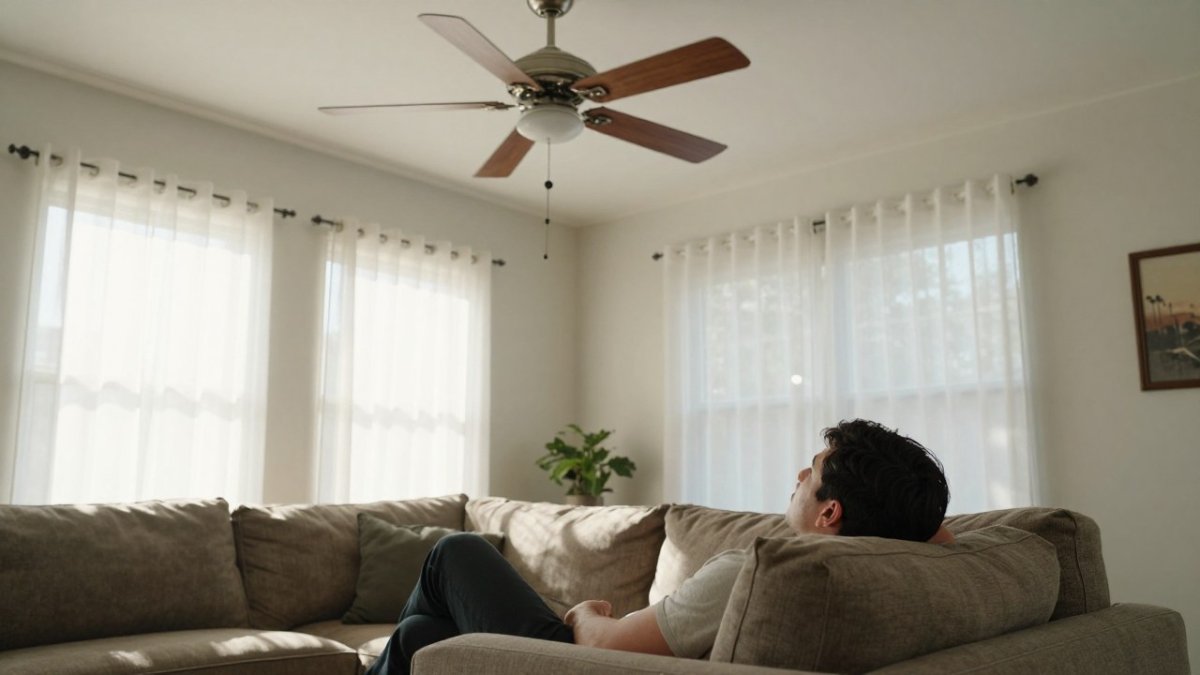
Fans are the most inexpensive cooling tool you have. A ceiling fan uses only a small fraction of the power an air conditioner draws, so they are a practical way to stretch your comfort range.
Block Heat Before It Enters: Window Coverings, Solar Gain, and Attic Ventilation
Sunlight through windows is one of the largest sources of unwanted heat in a Florida home, and it can quietly drive up home cooling costs all summer. Close blinds, shades, or curtains on sun-facing windows during the afternoon, when solar heat gain peaks. Light-colored or reflective window coverings reflect more heat back outside.
Your attic matters just as much. A hot attic radiates heat into the rooms below, and a solar attic fan can vent that heat out before it spreads. Our team at Tubular Sun offers solar attic fan cooling solutions designed for exactly this job, and they can be a strong fit for homes with stuffy upper floors.
Seal Leaks and Maintain Your System: The Most Efficient Way to Use AC
Cooled air is expensive, so keep it inside. The two cheapest wins in this section are sealing the envelope and keeping the equipment clean, and both are do-it-yourself jobs for most homeowners. The trick is knowing which leak matters most, because not all gaps are equal.
Start with a simple diagnostic. On a hot afternoon, hold the back of your hand near window and door frames, electrical outlets on exterior walls, and the attic hatch. A noticeable draft or a temperature difference means air is moving.
Seal in this order:
- Attic and duct leaks first. Foil tape or mastic on duct joints, and caulk or spray foam where ducts pass through the ceiling, often deliver the largest comfort gain per dollar because they stop cooled air from escaping into a 130°F attic.
- Windows and doors next. Weatherstripping and door sweeps are inexpensive and easy; caulk around frames and where siding meets the wall.
- Penetrations last. Outlets, light fixtures, and plumbing penetrations on exterior walls are small but numerous, and a tube of caulk goes a long way.
Maintenance is the other half. Replace or clean the air filter every one to three months, more often if you have pets or run the system hard, because a clogged filter raises the pressure the blower must overcome and reduces airflow to every room.
Watch out: sealing a house tightly without addressing ventilation can trap moisture and indoor pollutants. If you seal aggressively, pair it with a plan for fresh air, a bath fan, a whole-house ventilation strategy, or a dehumidifier, rather than sealing every gap and hoping for the best.
Ventilation also helps. Whole house and attic ventilation fans, described on our whole house fan page, can pull out hot, stale air so the air conditioner has less work to do. Homeowners who want a deeper look can read our guide to energy-efficient home cooling solutions.
The article’s sealing and maintenance steps, in order of priority, look like this:
| Step | What to do | Timing or frequency |
|---|---|---|
| Seal attic and duct leaks | Foil tape or mastic on duct joints; caulk or spray foam where ducts pass through the ceiling | First priority |
| Seal windows and doors | Weatherstripping, door sweeps, caulk around frames | Next priority |
| Seal penetrations | Caulk outlets, light fixtures, and plumbing on exterior walls | Last priority |
| Replace or clean air filter | Clean or replace to keep airflow to every room | Every one to three months |
| Clear the condenser | Remove leaves, grass clippings, and debris; keep clearance | Ongoing, with a couple of feet of clearance |
| Professional tune-up | Technician checks refrigerant, cleans coils, confirms efficiency | Before the hottest months |
Cutting Cooling Bills in an Apartment or Smaller Space
Apartments face different limits. You may not control the roof, the ductwork, or the windows, but you still have options. Use a thermostat-friendly routine, keep blinds closed during the day, and run fans at the same time as the air conditioner. Avoid heat-producing appliances such as ovens and dryers during peak afternoon hours.
Smaller spaces also cool faster, so a well-placed fan can make a bedroom feel comfortable without cooling the whole unit. Ask your landlord whether any ventilation upgrades are possible before you spend your own money on them.
Cooling-System Sizing, Replacement, and the Least Expensive Way to Cool a House
Sometimes the real problem is the equipment itself. An oversized system short-cycles, dehumidifies poorly, and wastes energy. An undersized system runs constantly and never catches up on hot days. If your system is old, noisy, or repeatedly needs repairs, replacement may save more over time than continued fixes.
The least expensive way to cool a house is usually the combination that removes heat before it enters, keeps cooled air in place, and lets the system run less. Replacing equipment is a bigger decision, and the right size depends on your home’s layout, insulation, and window exposure, so a professional load assessment is worth the time.
Book Your Free Consultation to Find Your Biggest Savings
Every home is different, and the biggest savings often come from the one fix you did not expect. At Tubular Sun, our Certified Installation Consultants can walk through your house, identify the heat sources that matter most, and explain the options in plain terms. Consultations are free, and our installations are often completed in about two hours for Solatube daylighting systems.
We are a Solatube Premier Dealer serving Southwest Florida, and we focus on lowering your monthly A/C and utility bills while improving comfort, air quality, and roof life. Contact Tubular Sun to schedule your free consultation and start with the savings that matter most to your home.
Frequently Asked Questions
What is the best AC temperature for summer to save money?
Many homeowners set their thermostat to 78°F when they are home and awake, then raise it several degrees while they are away or asleep. Each degree above 72°F typically reduces cooling energy use, so a higher setting paired with ceiling fans can keep you comfortable at lower cost. Programmable or smart thermostats make these setbacks automatic. Set the temperature gradually rather than making large jumps, and avoid setting the thermostat lower than you need, since colder settings do not cool the house faster.
Can fans help reduce air-conditioning costs?
Yes. Ceiling fans and circulating fans cool people through evaporation and airflow, not by lowering the air temperature. That means you can raise the thermostat several degrees and still feel comfortable. Turn fans off when you leave the room, since fans cool people rather than empty spaces. Fans cost far less to run than an air conditioner, so they are one of the most affordable ways to reduce cooling bills.
How can I save money on air conditioning in an apartment?
Apartment renters have fewer options than homeowners, but several steps still help. Use portable or window-mounted fans, close blinds or curtains on sun-facing windows during the day, and run the AC only when the unit is occupied. Keep interior doors open to share cooled air, and check that the unit’s filter is clean. Ask your landlord about sealing window gaps or upgrading window coverings.
What is the least expensive way to cool a house?
The least expensive approach combines several low-cost measures: fans, blocking sunlight with window coverings, sealing air leaks, and keeping the thermostat at a moderate setting. Ventilation fans that remove hot attic air can also reduce the load on your air conditioner. Regular filter changes and system maintenance keep equipment running efficiently. Pricing depends on scope and your home’s needs, so visit the Tubular Sun pricing page or request a quote for current prices.

