
Best Ways to Lower Home Humidity: 7 Proven Methods
Table of Contents
- Why High Humidity Damages Your Home and Health
- How to Spot the Signs of High Humidity in House Rooms
- Method 1: Use Attic Ventilation Systems to Flush Trapped Moisture
- Method 2: Dehumidifier vs Whole House Fan: Which One Fits Your Home?
- Method 3: Tune Your HVAC System and Air Circulation
- Method 4: Seal Air Leaks and Add a Vapor Barrier
- Method 5: Change Daily Habits That Add Water Vapor
- Method 6: Smart Home Automation for Moisture Control
- What Most Homeowners Get Wrong
- When to Call a Professional
- Frequently Asked Questions
Last Updated: September 11, 2026
Why High Humidity Damages Your Home and Health
High humidity means excess water vapor in indoor air, typically relative humidity above 50-55%, and it damages both structure and occupants. Warped baseboards, peeling paint, and attics that trap damp air for months are common results. The best ways to lower home humidity start with understanding what you’re measuring.
The Difference Between Relative Humidity and Absolute Humidity
Relative humidity is the percentage of water vapor the air holds versus the maximum it could hold at that temperature. Absolute humidity is the actual mass of water vapor per unit volume, regardless of temperature. Warm air holds more moisture than cool air, so cooling a room raises relative humidity even with no new water.
How Climate and Construction Shape Your Moisture Problem
Homes in hot, humid climates battle moisture from the outside in; tightly built houses trap it inside. Crawl spaces, slab-on-grade construction, and poorly vented attics each create their own moisture patterns, and a misplaced vapor barrier can hold water against the framing.
How to Spot the Signs of High Humidity in House Rooms
The clearest signs of high humidity in house rooms are condensation on windows and cold pipes, musty odors that return after cleaning, and wood that swells, warps, or squeaks. Catching these early saves you from mold remediation and structural repairs.
Condensation, Musty Odors, and Warped Wood
Water beading on single-pane windows each morning is the classic first signal. Musty smells in closets, under sinks, and basements point to mold already growing. Doors that stick in summer and gaps that appear in winter mean wood is absorbing and releasing moisture seasonally.
When to Measure With a Hygrometer
A hygrometer is an inexpensive device that measures relative humidity, and every homeowner should own one. Place it in the rooms you suspect: basements, bathrooms, attics, and any space that feels damp. Readings consistently above 55% mean it’s time to act. According to EPA guidance on indoor air quality and moisture control, keeping indoor relative humidity between 30% and 50% discourages mold growth and dust mites. That range is your target.
Method 1: Use Attic Ventilation Systems to Flush Trapped Moisture
Attic ventilation systems move outside air through the attic, carrying heat and water vapor out before they migrate into living areas. Without airflow, moisture from cooking, showers, and laundry rises into a hot attic and condenses on cool roof decking.
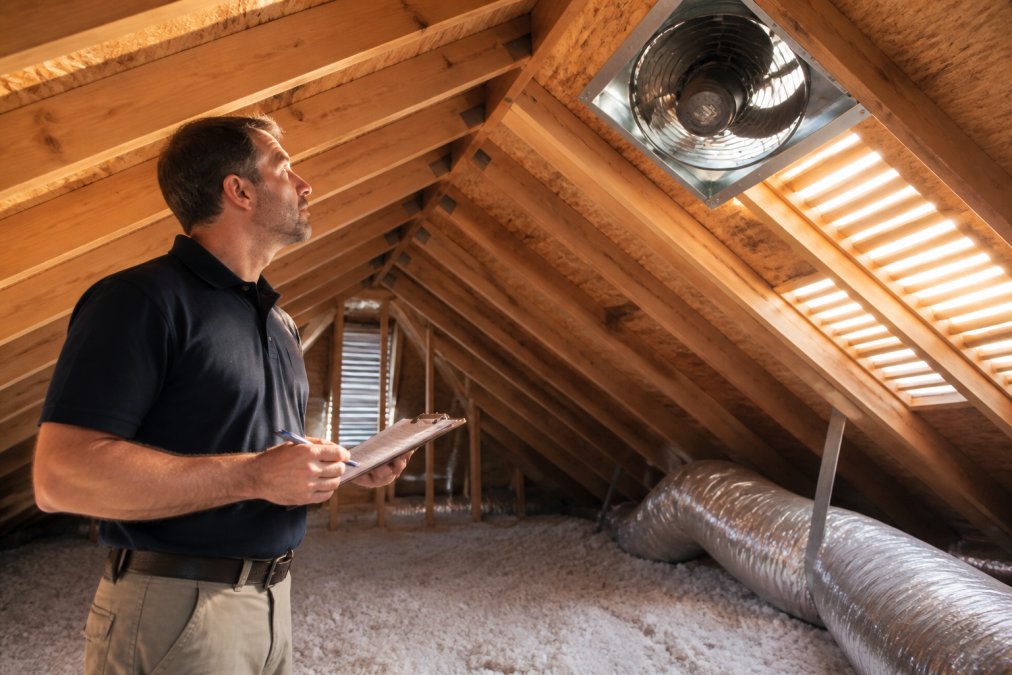
How Attic Fans and Ridge Vents Work Together
Ridge vents along the roof peak let hot air escape while soffit vents at the eaves pull cooler air in; an attic fan accelerates that exchange. The combination keeps the roof deck dry and reduces the heat load your AC fights.
Check that your soffit vents aren’t blocked by insulation. A common installation mistake is blowing insulation right over the intake vents, which starves the whole system and traps moisture exactly where you don’t want it.
Method 2: Dehumidifier vs Whole House Fan: Which One Fits Your Home?
The dehumidifier vs whole house fan decision comes down to whether your problem is excess moisture or excess heat. A dehumidifier removes water vapor; a whole house fan pulls cooler outside air through your living space and pushes hot air out through the attic.
| Option | What It Does | Best For | Main Limitation |
|---|---|---|---|
| Refrigerant dehumidifier | Condenses water vapor on cold coils | Damp basements, sealed rooms | Adds some heat, needs drainage |
| Desiccant dehumidifier | Absorbs moisture with a drying wheel | Cooler spaces, low temperatures | Higher energy use |
| Whole house fan | Exchanges indoor air with outside air | Hot attics, stuffy evenings | Only works when outside air is drier |
Desiccant vs Refrigerant Dehumidifiers
A desiccant dehumidifier uses a moisture-absorbing material, making it effective in cooler spaces where refrigerant coils struggle. Refrigerant models work best in warm, damp rooms and are the more common choice for basements.
When a Whole House Fan Makes More Sense
If your attic runs hot and evenings are cooler than your indoor air, a whole house fan moves large volumes of air quickly and cheaply. It won’t help on a muggy afternoon when outside air is wetter than inside air.
Running a whole house fan when outdoor humidity is higher than indoor humidity pulls moisture straight into your home. Check your hygrometer before you flip the switch.
Method 3: Tune Your HVAC System and Air Circulation
Your air conditioner is the largest dehumidifier in most homes, but only when it runs long enough to wring water out of the air. Understanding why it sometimes fails separates a comfortable house from one that feels cold and clammy at once.
Latent Heat, Sensible Heat, and Why Runtime Matters
When your AC runs, it removes sensible heat (the temperature on a thermometer) and latent heat (energy stored in water vapor). The coil condenses moisture only while the compressor runs, so a unit that satisfies the thermostat in eight minutes never pulls meaningful water from the air.
This is the most common failure mode in humid homes: an oversized system that short-cycles, hits the setpoint fast, shuts off, and leaves relative humidity in the 60s. A properly sized unit should run in longer, steadier cycles, often 15 to 20 minutes or more, so the coil stays below dew point long enough to drain.
The Coil Temperature Rule of Thumb
A refrigerant coil typically runs in the low 40s Fahrenheit when operating correctly, well below the dew point of most indoor air, which is why condensation forms and drains away (energy.gov). If the coil is dirty, the charge is off, or airflow is too high, coil temperature rises and moisture stops condensing. The air still feels cool, but it comes out wet.
Three things protect that coil temperature:
- Airflow. A clogged filter or blocked return raises coil temperature and kills dehumidification. Replace filters every 1-3 months, more often with pets or heavy dust.
- Charge and metering. A system low on refrigerant runs a warm coil. This is a service call, not a DIY fix.
- Drainage. A clogged condensate drain or a pan that overflows puts the water right back into the air. Flush the drain line seasonally with a cup of distilled vinegar.
If your system has a “dry” or “dehumidify” mode, it slows the blower to keep the coil cold and extend runtime. It works, but it also cools the house more slowly. Use it during shoulder seasons when humidity is high but the temperature is mild.
Exhaust Fans, Air Filtration, and Air Exchange Rate
Bathroom and kitchen exhaust fans should run during and for at least 15-20 minutes after showering or cooking. Size the fan by cubic feet per minute (CFM), not noise: a bathroom generally wants about 1 CFM per square foot of floor area, with a 50 CFM minimum for small powder rooms. If the mirror still fogs after ten minutes, the fan is undersized or the duct is restricted. Air filtration keeps the coil clean so it condenses moisture efficiently. Your air exchange rate, how many times indoor air is replaced per hour, determines how quickly stale, humid air leaves. Most homes land between 0.35 and 1.0 air changes per hour naturally, and tight modern construction sits at the low end, good for energy bills, bad for moisture, which is why mechanical ventilation matters more in newer houses.
- Replace HVAC filters every 1-3 months depending on use
- Run bathroom exhaust fans for 20 minutes after showers
- Keep supply and return vents unblocked by furniture and rugs
- Schedule annual coil cleaning and condensate drain flushing
- Verify the exhaust fan actually moves air, hold a tissue to the grille
Why ‘Cooling’ Is Not Always ‘Dehumidifying’
Relative humidity is a ratio, not a fixed quantity. Warm air holds far more water vapor than cool air, so cooling a room without removing water leaves the same vapor in air with lower capacity, and the relative humidity percentage climbs. That’s why a basement can read 70% relative humidity at 65°F and feel damp while a living room reads 50% at 75°F and feels fine: the basement air holds less total water but is closer to saturation. It’s also why an oversized AC can leave a house cold and sticky at once. Watch both numbers: a hygrometer displaying temperature and relative humidity together tells you whether you have a cooling problem or a moisture problem. If temperature is on target and humidity is high, you need dehumidification or longer runtime, not a lower thermostat setting.
Method 4: Seal Air Leaks and Add a Vapor Barrier
Air sealing stops humid outside air from entering, and a vapor barrier blocks moisture moving through your foundation and walls. Weatherstripping around doors and windows is the cheapest first step.
Weatherstripping, Crawl Space Moisture, and Basement Moisture
Crawl space moisture and basement moisture are among the most overlooked sources of indoor humidity. Heavy polyethylene sheeting over a crawl space floor can cut rising vapor dramatically; seal gaps around pipes, vents, and electrical penetrations with caulk or foam.
Method 5: Change Daily Habits That Add Water Vapor
Everyday activities release more water vapor than most people expect. A single shower can add roughly half a pint of water to the air, and a family of four showering daily, cooking three meals, and running laundry can push several gallons of moisture into the house every week. If that water can’t leave, it condenses on the coolest surfaces it can find.
Where the Moisture Actually Comes From
Ranking indoor moisture sources by volume helps you decide what to fix first:
- Showering and bathing. The largest single daily source in most homes. A 10-minute hot shower releases on the order of a pint of water vapor.
- Cooking. Boiling pasta, simmering stock, and running a dishwasher all add moisture; an uncovered pot of boiling water releases vapor continuously.
- Laundry. A dryer vented indoors dumps nearly all the water it removes back into the room, and air-drying clothes inside does the same more slowly.
- Breathing and perspiration. A family of four adds roughly a gallon of water per day just by living.
- Plumbing leaks. A slow drip or running toilet adds moisture 24 hours a day, often unnoticed.
The Habits That Actually Move the Needle
Not all of these are equal. The highest-leverage changes, in rough order of impact:
- Vent the dryer outdoors, never into the garage or attic. An indoor dryer vent sends every ounce of removed water back into your living space and is a fire hazard.
- Run the range hood every time you cook, not just when something smells. An outdoor-venting hood removes moisture and grease; recirculating hoods do almost nothing for humidity.
- Cover pots while cooking. A lid traps most of the steam that would otherwise become indoor humidity.
- Take shorter, cooler showers and run the bathroom fan during and after. Cooler water produces less steam, and the fan clears what escapes.
- Fix dripping faucets and running toilets. A running toilet can waste hundreds of gallons a day, some of it ending up as ambient humidity.
- Avoid drying clothes on indoor racks when humidity is already high. If you must air-dry indoors, run an exhaust fan or dehumidifier nearby.
The single highest-return habit change is venting the dryer outdoors. It is cheap, permanent, and removes one of the largest recurring moisture sources in the home. Everything else on this list is a smaller, incremental gain.
Regional Climate Considerations
Habit advice is not universal. In a hot, humid climate, opening windows to “air out” the house on a muggy afternoon makes things worse, you import moisture-laden air and ask your AC to remove it. In an arid climate, the opposite is true: opening windows at night is one of the cheapest ways to drop indoor humidity, because outside air is drier.
The rule is simple: compare your indoor hygrometer reading to outdoor conditions before you ventilate. If outdoor air is drier, ventilation helps; if it is wetter, ventilation hurts. That single check prevents the most common self-inflicted humidity mistake homeowners make.
Health and Structural Stakes
Sustained indoor relative humidity above 60% creates conditions dust mites and mold both thrive in (the CDC). Dust mites multiply fastest in humid environments, and their waste is a common trigger for asthma and allergic rhinitis; mold spores need only a damp surface and a few days to colonize. The EPA recommends keeping indoor relative humidity between 30% and 50% to discourage both, which is why the habit changes above are a health and structural maintenance strategy, not just a comfort preference.
Method 6: Smart Home Automation for Moisture Control
Smart home automation takes the guesswork out of moisture control by linking sensors to fans and dehumidifiers. A connected hygrometer can trigger an exhaust fan automatically when humidity crosses your threshold, and smart thermostats can adjust cooling to dehumidify more effectively. Instead of remembering to check readings, the system responds in real time, and in humid climates that automation pays for itself in comfort and avoided repairs.
What Most Homeowners Get Wrong
The biggest mistake is treating humidity as a single problem with a single fix. Moisture enters from outside, rises from the ground, and is generated inside. You need to address all three.
A second common error is running ventilation without checking whether the outside air is actually drier. Ventilation only helps when it moves wet air out and dry air in.
When to Call a Professional
Some moisture problems are too large or too well hidden for DIY fixes. Attic ventilation, whole house fans, and daylighting systems that improve airflow require proper sizing and installation to work safely and effectively. Attic ventilation, whole house fans, and daylighting systems that improve airflow require proper sizing and installation to work safely and effectively. Our Certified Installation Consultants handle attic, garage, and whole house ventilation, often completing installations in about two hours. As a Solatube Premier Dealer, we also brighten dark, windowless rooms with Solatube daylighting systems while improving air circulation. Every project starts with a free consultation, and our team can assess your moisture problem and recommend the right combination of ventilation and daylighting.
Frequently Asked Questions
What is the ideal indoor humidity level according to the EPA?
The EPA recommends keeping indoor relative humidity between 30% and 50%, with 50% as the upper limit for most homes. Above that range, dust mites, mold growth, and condensation become more likely. A hygrometer costs under $20 and gives you a real number instead of a guess. Check it in the morning and evening for a week to see how your home behaves before you buy any equipment.
What are the clearest signs of high humidity in house rooms?
Watch for fogged windows in the morning, musty odors in closets, warped wood floors, peeling paint, and a clammy feel on tile. Dark, windowless rooms often show these signs first because air circulation is poor there. If you spot black speckling near ceiling corners, humidity has likely been high for weeks. A hygrometer reading above 60% confirms it.
How to lower humidity in house fast?
Run your air conditioner and set the fan to auto, then turn on kitchen and bathroom exhaust fans while cooking or showering. A portable dehumidifier in the wettest room can drop relative humidity within hours. If you have attic ventilation systems already installed, run them during the hottest part of the day. Avoid opening windows when outdoor dew point is above 60 degrees, since that adds water vapor instead of removing it.
Can poor attic ventilation cause high indoor humidity?
Yes. Trapped moisture in an attic migrates downward through ceilings and into living space, raising indoor relative humidity. Attic ventilation systems like powered fans and ridge vents push that moist air out. In hot, humid climates, an attic that stays 20 degrees hotter than outside also drives heat and vapor into the home, which makes your HVAC system work harder. Fixing attic airflow often lowers whole-house humidity.
High humidity is a system problem, not a single-room annoyance, and it rarely fixes itself once mold and rot set in. Tubular Sun installs energy-efficient ventilation solutions, including attic and whole house fans, that remove heat, moisture, and odors while lowering your monthly utility bills. If you’re tired of clammy rooms and rising energy costs, get started with Tubular Sun and schedule your free consultation today.